Mold Remediation in Vail Valley Homes: What You Need to Know
Mountain homes face unique mold risks that most homeowners never see coming. Here is how to identify mold, understand why it thrives in the Vail Valley, and get rid of it for good.

Mold does not announce itself. It grows quietly — behind walls, under floors, inside crawl spaces — and by the time most homeowners notice it, the problem is already well established. In the Vail Valley, where mountain climate conditions create a perfect environment for moisture intrusion and mold growth, this is a more common problem than most people realize.
The good news is that mold is treatable. The key is understanding what you are dealing with, catching it early, and addressing it the right way — not just masking it.
Why Mountain Homes Are Especially Vulnerable
Mold needs three things to grow: moisture, a food source (organic material like wood, drywall, or insulation), and the right temperature. Mountain homes in Eagle County check all three boxes more readily than homes in drier climates.
Snowmelt and Ground Moisture
The Vail Valley receives significant snowfall, and snowmelt creates sustained ground moisture that presses against foundations, crawl spaces, and basement walls for weeks at a time. Even well-built homes can experience moisture intrusion during heavy melt seasons, and that moisture does not need to be visible to cause mold growth.
Freeze-Thaw Cycles
Repeated freezing and thawing causes expansion and contraction in building materials — concrete, wood framing, caulk, and flashing. Over time, this creates micro-cracks and gaps that allow moisture to enter spaces where it was never intended to go. A crawl space that was dry five years ago may be damp today simply because the building envelope has shifted.
Humidity from Ski Season Living
Wet gear, snow boots, damp outerwear, and the general humidity that comes with ski season living adds significant moisture load to a home's interior. When that moisture condenses on cold surfaces — exterior walls, window frames, uninsulated pipes — it creates ideal conditions for mold.
Vacation Home Vacancy
Many properties in the Vail Valley sit vacant for extended periods. A home that is not regularly occupied, heated, or ventilated during shoulder seasons can develop mold problems that go undetected for months. By the time the owners return, what started as a small moisture issue may have spread significantly.
Warning Signs of Mold in a Mountain Home
Mold is not always visible. Here are the signs that should prompt a closer look:
Musty odor. A persistent earthy or musty smell — especially in basements, crawl spaces, closets, or bathrooms — is one of the most reliable early indicators of mold growth. If the smell is stronger when the HVAC system runs, mold may be present in the ductwork or air handler.
Visible discoloration. Black, green, gray, or white patches on walls, ceilings, grout lines, or around windows are obvious signs. But mold also grows behind surfaces — discoloration that appears to bleed through paint or drywall often indicates a larger colony behind the wall.
Water stains or efflorescence. Old water stains on walls or ceilings indicate past moisture intrusion. Efflorescence — white, chalky mineral deposits on concrete or masonry — signals that water is moving through the material. Both are risk factors for mold even if active mold is not yet visible.
Warped or buckled materials. Wood floors, drywall, or trim that has warped, buckled, or separated from adjacent surfaces has absorbed moisture. Mold often follows.
Respiratory symptoms. Increased allergy symptoms, congestion, coughing, or headaches that improve when you leave the home and return when you come back can indicate elevated mold spore levels in the indoor air.
Condensation on windows or pipes. Chronic condensation indicates humidity levels that are high enough to support mold growth on other surfaces throughout the home.
The Most Common Locations for Mold in Vail Valley Homes
Knowing where to look is half the battle. These are the areas we find mold most frequently in mountain properties:
Crawl Spaces
The crawl space is the single most common location for mold in mountain homes. Unencapsulated or poorly encapsulated crawl spaces are exposed to ground moisture year-round, and the combination of wood framing, insulation, and limited airflow creates ideal mold conditions. Mold in the crawl space is particularly concerning because air from the crawl space migrates upward into the living areas of the home.
Basement Walls and Floors
Concrete basement walls that are not properly waterproofed allow moisture to wick through from the surrounding soil. Mold grows on the concrete itself and on any organic material in contact with it — wood framing, drywall, carpet, stored belongings.
Bathrooms
Bathrooms generate significant moisture, and mountain homes often have multiple bathrooms that see heavy use during ski season. Grout lines, caulk seams, and the area behind shower walls and under bathroom floors are common mold locations, especially in bathrooms with inadequate ventilation.
Around Windows and Exterior Doors
Cold exterior surfaces combined with warm interior air create condensation zones around windows and doors. Mold grows in the window frame, on the surrounding drywall, and in the wall cavity behind the trim.
HVAC Systems and Ductwork
Mold in the HVAC system is particularly problematic because the system distributes spores throughout the entire home every time it runs. Signs include musty odors when the system operates, visible growth on supply or return vents, and persistent air quality issues despite surface cleaning.
Attic Spaces
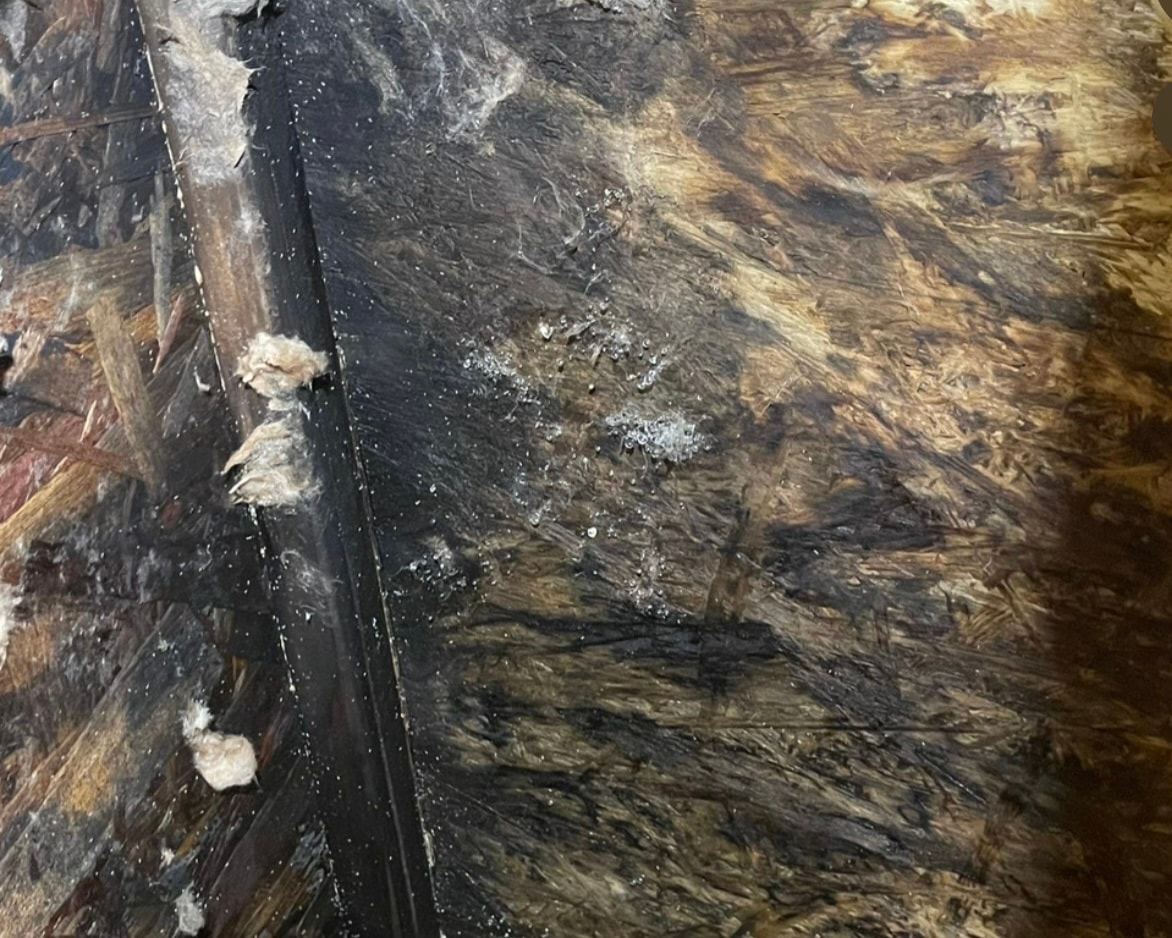
Inadequate attic ventilation combined with heat loss from the living space below creates condensation on the roof deck. Mold on attic sheathing is common in mountain homes and is often discovered only during a home inspection or roof repair.
How Professional Mold Remediation Works
Mold remediation is not the same as mold cleaning. Cleaning addresses visible surface mold. Remediation addresses the source of the problem, removes the mold colony, and prevents recurrence. Here is the professional process:
Inspection and Assessment
A thorough inspection identifies all affected areas — including hidden ones. This may involve moisture meters, thermal imaging, and air quality testing to understand the full scope of the problem. Identifying the moisture source is critical: remediation without addressing the source is temporary at best.
Containment
Before any removal begins, the affected area is contained to prevent spores from spreading to unaffected parts of the home. This typically involves plastic sheeting, negative air pressure, and HEPA-filtered air scrubbers that capture airborne spores.
Removal of Affected Materials
Porous materials that have been colonized by mold — drywall, insulation, carpet, wood framing in severe cases — are removed and disposed of properly. Mold cannot be effectively cleaned out of porous materials; removal is the only reliable solution.
Treatment of Remaining Surfaces
Hard surfaces that cannot be removed — concrete, wood framing with surface mold — are treated with EPA-registered antimicrobial agents that kill mold at the root level. Encapsulants may be applied to seal treated surfaces and prevent future growth.
HEPA Vacuuming and Air Scrubbing
After removal and treatment, HEPA vacuuming removes residual spores from surfaces, and air scrubbers run continuously to clear the air of airborne particles. This step is critical for restoring indoor air quality.
Moisture Source Correction
The moisture problem that allowed mold to grow in the first place must be corrected. This may involve crawl space encapsulation, improved drainage, vapor barriers, ventilation upgrades, or repairs to the building envelope. Without this step, mold will return.
Post-Remediation Verification
A final inspection and, where appropriate, post-remediation air quality testing confirms that the remediation was successful and that spore levels have returned to normal.
What Not to Do
A few common mistakes make mold problems worse:
Do not paint over mold. Paint does not kill mold. It traps it temporarily, but the colony continues to grow beneath the surface and will eventually break through.
Do not use bleach on porous surfaces. Bleach kills surface mold on non-porous materials like tile, but it does not penetrate porous surfaces like drywall or wood. The water in bleach can actually feed mold growth deeper in the material.
Do not run fans to dry out a mold-affected area. Fans spread spores to unaffected areas of the home. Containment comes first.
Do not ignore a musty smell. A musty odor without visible mold is not a sign that the problem is minor — it is a sign that the mold is hidden. Hidden mold colonies are often larger than visible ones.
Mold and Real Estate in the Vail Valley
Mold is a material defect that must be disclosed in Colorado real estate transactions. For homeowners preparing to sell, undisclosed mold — or mold that was improperly remediated — can derail a transaction, trigger legal liability, and result in significant price reductions.
Professional remediation with documentation provides buyers and their inspectors with confidence that the problem was addressed correctly. For sellers, it is a far better outcome than a failed inspection or a renegotiated price.
Protecting Your Home Going Forward
After remediation, the goal is to keep moisture levels in check so mold cannot return. Practical steps for mountain homeowners:
- Crawl space encapsulation — a sealed, conditioned crawl space eliminates the primary moisture pathway in most mountain homes
- Dehumidifiers in basements and crawl spaces during shoulder seasons
- Bathroom exhaust fans that vent to the exterior (not into the attic) and run for at least 20 minutes after showering
- Regular inspection of crawl spaces, basements, and attic spaces — at minimum once a year, ideally before and after ski season
- Prompt repair of any roof, flashing, or foundation issues that could allow water intrusion
We Know Mountain Homes
SteamMaster360 has been remediating mold in Vail Valley properties for decades. We understand the specific moisture dynamics of mountain construction, the seasonal patterns that drive mold growth in Eagle County, and the documentation requirements that matter when a property changes hands.
If you have noticed a musty smell, visible discoloration, or any of the warning signs described above — or if you simply want peace of mind before a sale or a long vacancy — reach out for a free assessment. We will give you a straight answer about what you are dealing with and what it takes to fix it.
Explore Topics
Written by
SteamMaster360
Content creator and writer sharing insights and stories.